What products can you load into a Flexitank?
Foodstuff:
Wine, Palm Oils, Fish Oils, Corn Syrup, Tallow, Fruit Juices, Mineral Water, Vegetable Oils, Concentrates and Glucose.
Non-Foodstuff:
Base Oils, White Oils, Transformer Oils, Paraffin Wax, Printing Inks, Emulsions, Fertilizers, Synthetic Latex, Drilling Mud Additives, Lubricants, Lube Oils Additives, Paints, Glycerin and U.C.Os.
What quantity can be loaded in one Flexitank?
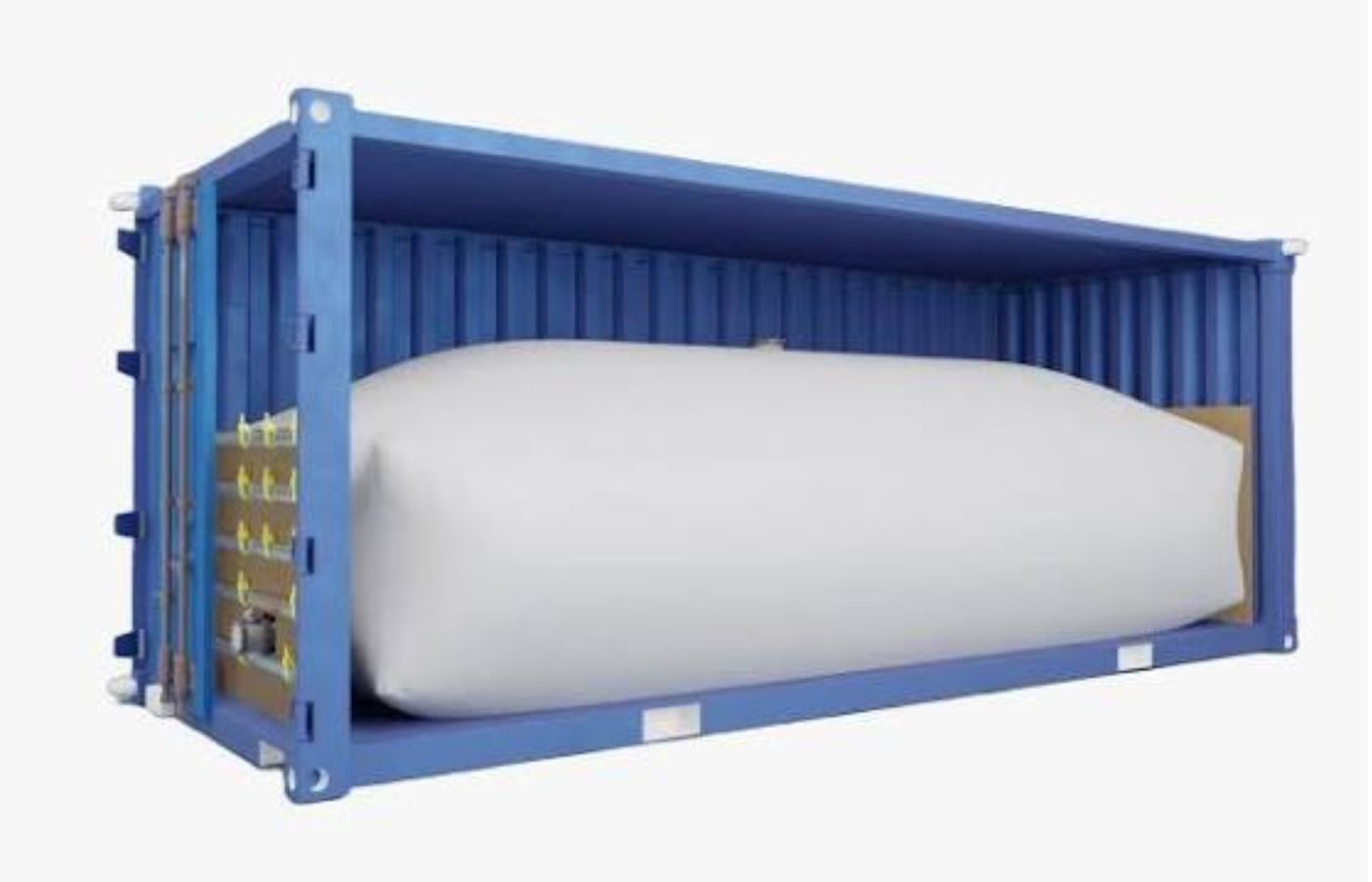
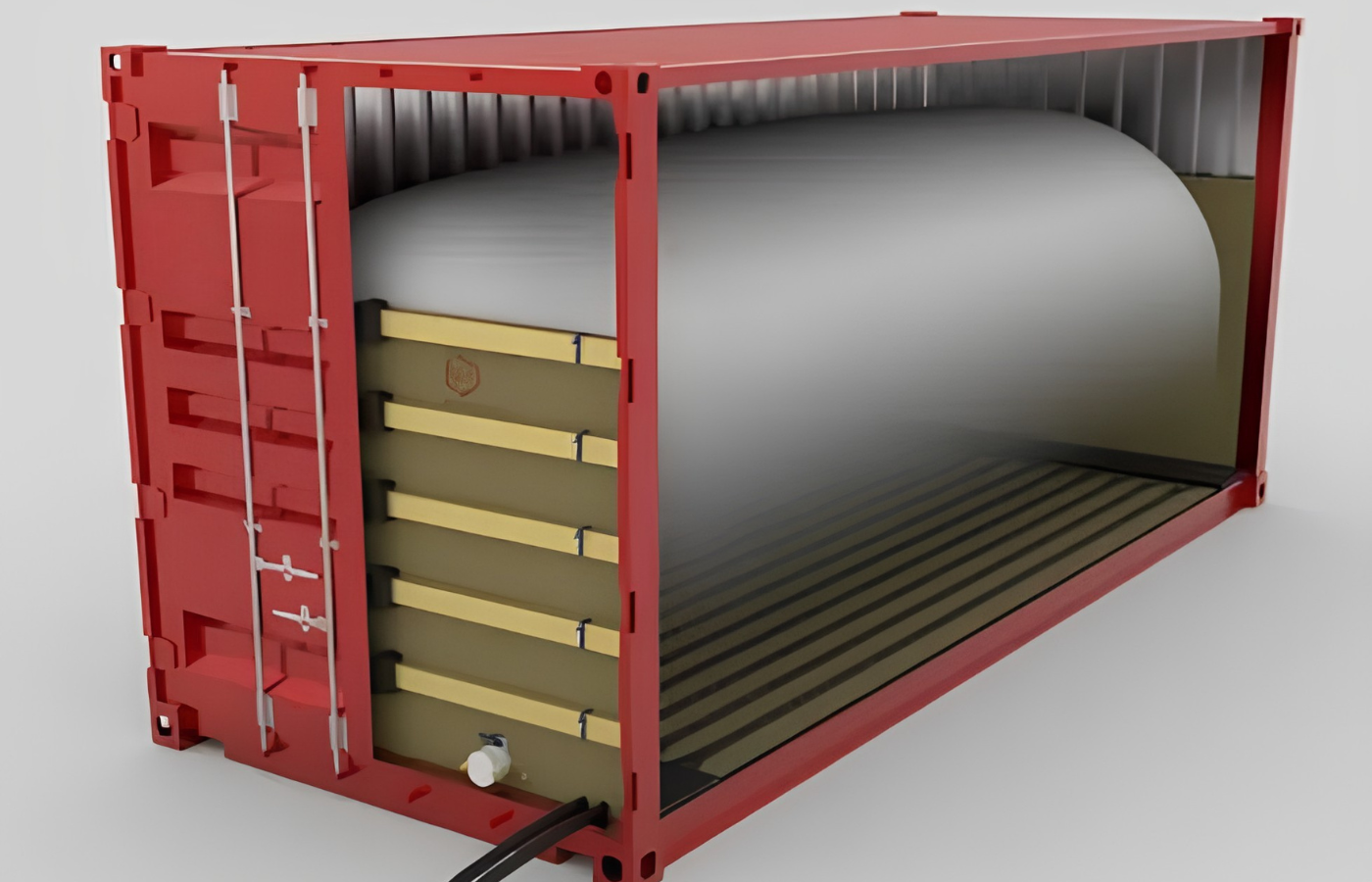
Depending on the size of the flexitank, from 16,000 to 24,000 liters. However, each flexitank has its own volumetric rate indicated by the manufacturer. Any compliance failure associated with this parameter can cause serious damage.
What are the container requirements?
Container specification and condition are very important when completing a successful flexitank transport and should conform to the following criteria.
Container should be a 20-foot ISO dry van unit with 30,000 kg gross weight load capacity and not more than 5 years of age. Container should have:
- Corrugated steel side and front walls (smooth-walled containers are not acceptable).
- Vertical recess in door pillars to accept bulkhead-retaining dowels.
Container Selection
The following criterion applies when accepting a container that is to be used in a flexitank shipment:
- Ensure the container complies with the specification as per above.
- Check all previous damage repairs. Excessive side or rear wall repairs will render the container unusable.
- Check all door-locking mechanisms are in good working condition. Each door should have two (2) locking bars.
- Ensure there is no unrepaired damage to the container and that it is “wind and water tight”. To do this, step inside the container and close the door and see if any daylight is visible. The container should be rejected if there are any inward or outward dents in the walls.
- Check that the floor is clean, dry, and free from debris and there is no odor.
Containers should be rejected if:
- There is excessive sidewall repair that could weaken the container.
- There are sharp welds on repairs that could damage the flexitank.
- There is floor damage, holes, broken cross beams or sharp objects that cannot be removed.
- There are any bolts or sharp objects protruding from the doors.
- The door latches are broken or bent.
- The container is in a general state of disrepair.
- If the gross weight load capacity is less than 30,000 kg.
Can I insure the Flexitank shipment?
Shipments with flexitanks can be insured with special insurance contracts. The value of such contracts is invaluable because you can rest assured that your company’s activities will continue smoothly, even with unfortunate events for which you are not responsible or you cannot predict.
Flexitank and environment
Flexitanks beside their high functionality and efficiency, offer multiple benefits.
A fairly significant benefit is the protection of the environment and compliance with laws on environmental protection.
The maximum security which the Flexitank provides (when it is used by experienced operators and experts) and the integrated management of transport volume, which as experts we are able to offer to our customers, protect the environment and comply with local laws.
A. Compliance with the law
Under Greek law – l.2939/01 – each importer is required to manage the packaging of goods received in order not to pollute the environment or to minimize the pollution caused by this packaging.
NEST, examining closely the needs of its clientele, takes care of its clientele, applying the relevant applicable law in all import/export cases.
B. Environmental protection
NEST is sensitive to issues of environmental management.
In each import-export action that we undertake, we propose the activation of procedures and instruments to minimize pollution.
The use of flexitanks reduces the need for other means of transport, thus saving resources and reducing pollution.
What products cannot be loaded into Flexitanks?
All liquid bulk products classified as hazardous by IMO are not suitable to be loaded into flexitanks. Additionally, products that require special handling or refrigerated – climate-controlled conditions are not suitable for flexitank transport.
Flexitanks vs Isotanks, Drums and IBC’s
Flexitanks are a superior alternative to ISO containers, Drums & IBC’s. Shipping in bulk using flexitanks offers environmental & economical benefits such as:
- Cost effectiveness
- Safe, reliable tanks which fit perfectly into 20 ft. containers
- Higher volumes of liquid can be shipped at one time
- Flexitanks reduce operating costs
- Re-usable containers allow for zero waste in shipping
- Assists with circular economy – Flexitanks can be recycled
- Flexitanks protect the quality and value of your bulk liquids in storage or transport
How safe is transportation into Flexitanks?
Flexitanks are special equipment. This means that special attention is needed to all stages of the flexitank usage, from manufacturing, fitting into the container and loading, to unloading and disposal.
Therefore, not all flexitank brands are the same nor can all flexitank operators provide the same services. We are so confident in our products and services that we will urge you to ask the carriers (shipping lines), about the quality we deliver to our customers.
Can I reuse my Flexitank?
No. Flexitanks are made for one use only.